

What is Single Sign-On (SSO)?
Single Sign-On (SSO) is an authentication process that allows users to log in once and gain access to multiple applications or systems without needing to authenticate again for each one. The goal of SSO is to enhance the user experience, simplify the management of user credentials, and minimize security risks associated with repeated password entry.
Basics of Single Sign-On (SSO)
Key Components and Players in an SSO System
SSO systems typically consist of several key components and players:
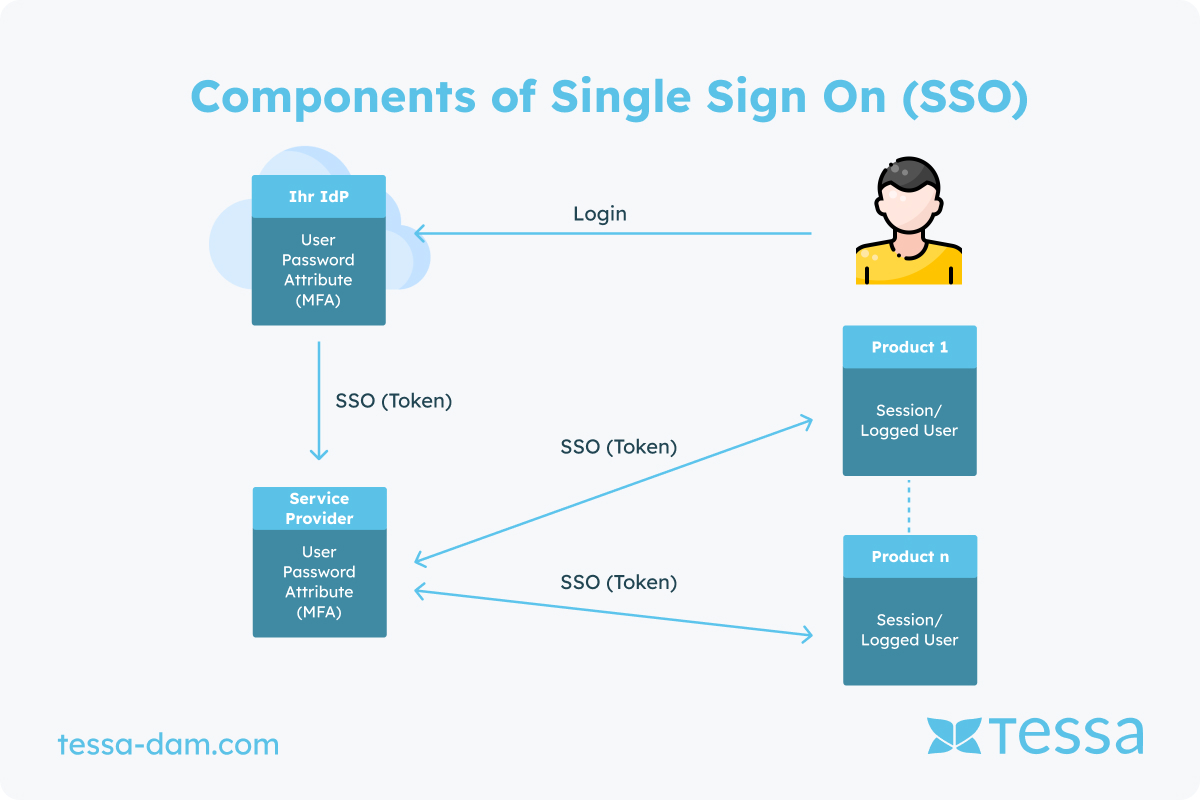
Users: The end users who access various services and applications.
Identity Provider (IdP): A service responsible for authenticating users and passing authentication information to Service Providers. The IdP manages user identities and ensures secure and reliable authentication.
Service Provider (SP): Applications or services that rely on the authentication information provided by the IdP to grant users access. Service Providers accept the user's authentication from the IdP and allow access to their resources based on the received authentication data.
SSO Tokens: Tokens are digital proofs generated by the Identity Provider to confirm a user's identity. These tokens contain information about the user and their access rights and are passed to the Service Provider to grant access. Depending on the protocol, these tokens can take various forms, such as SAML assertions in SAML-based systems or access tokens in OAuth-based systems. Tokens are typically time-limited and may include additional security features, such as signatures or encryption, to ensure the integrity and confidentiality of the data.
Protocols and Standards
Various protocols and standards are crucial for implementing SSO systems. The most notable include:
Security Assertion Markup Language (SAML): An XML-based standard format for transmitting authentication and authorization data between the IdP and SPs. SAML allows users to authenticate once and reuse this authentication across multiple applications.
OAuth: A protocol for authorization that enables applications to access resources on behalf of a user without requiring the application to store the user's credentials. OAuth is often used in conjunction with SSO, particularly in mobile and web applications.
OpenID Connect: An identity layer on top of OAuth 2.0, allowing the verification of a user's identity and the retrieval of basic profile information. OpenID Connect is commonly used for web single sign-on and API authentication.
Specific Implementations of SSO
What is Windows Single Sign-On and how does it work?
Windows Single Sign-On (SSO) is an authentication solution designed specifically for Windows-based systems. It allows users to log in once to their Windows operating system and then access all authorized resources within a network without re-entering credentials.
The functionality of Windows SSO primarily relies on Kerberos, a network authentication protocol. Kerberos uses "tickets" to confirm user identity and ensure secure access to various services. In a typical Windows environment, the user is authenticated at login by a Kerberos Ticket Granting Ticket (TGT), which is then used to access different network resources such as files, printers, or applications.
Windows SSO is commonly used in corporate networks to simplify user access management and enhance security. It integrates seamlessly with Active Directory (AD), a directory service that manages user data, policies, and authentication information. By integrating with AD, companies can centrally manage user access rights and ensure that only authorized users have access to sensitive data and resources.
What is SAP Single Sign-On and how does it work?
SAP Single Sign-On is an SSO solution specifically designed for SAP environments. It allows users to authenticate once and then access a wide range of SAP applications and services without needing to log in again.
The SAP NetWeaver Single Sign-On solution provides a comprehensive suite of features to improve authentication and user experience in SAP systems. It utilizes various authentication methods, including Kerberos, SAML, and X.509 certificates, to enable secure and seamless login. This solution integrates with existing directory services like Active Directory to manage user accounts and access rights.
SAP Single Sign-On offers additional security features such as support for multi-factor authentication (MFA), which enhances security by combining multiple authentication factors. It also supports the encryption of login data and the use of digital certificates to further secure the authentication process. These mechanisms help prevent unauthorized access to SAP systems and ensure the integrity and confidentiality of the data.
Future Perspectives and Development
The future of Single Sign-On (SSO) is shaped by rapid technological advancements and evolving IT security requirements. One significant development is the advancement of authentication protocols and security standards. New protocols like FIDO2 and WebAuthn offer passwordless authentication methods, further simplifying and securing the use of SSO systems. These technologies use biometric data or hardware tokens to verify user identity, making traditional passwords obsolete.
Another major trend is the increasing integration of Artificial Intelligence (AI) and machine learning in SSO solutions. These technologies can be used to detect suspicious user behavior and identify and prevent potential security threats in real time. AI-driven authentication methods, such as behavioral analytics, allow dynamic adjustment of security levels based on user behavior.
Despite the many benefits of SSO, there are also significant challenges that need to be addressed. One of the biggest challenges is the scalability of SSO systems, especially in large, globally operating companies. With the growth of cloud-based applications and the use of hybrid IT environments, it is becoming increasingly important to develop SSO systems that can integrate both on-premises and cloud services.
Another issue is data protection. As SSO systems represent centralized access points, they are potential targets for cyberattacks. A successful attack could not only grant access to numerous applications but also jeopardize sensitive user information. To mitigate this risk, advanced security measures such as regular security audits, strict access controls, and the implementation of zero-trust architectures are necessary.
The adaptability of SSO systems is also a crucial factor for their future success. Companies must ensure that their SSO solutions are flexible enough to adapt to new technologies and changing business requirements. This includes supporting new authentication methods, integrating with a wide range of applications, and complying with compliance requirements in various regions and industries.
SSO in the context of Digital Asset Management (DAM)
Single Sign-On and Digital Asset Management (DAM) are a natural fit. A DAM stores images, videos, documents and other assets in one central place that many teams, departments and often external partners need to reach. SSO keeps that access consistent, fast and secure, without separate credentials for every system.
By connecting your DAM to a central identity provider such as Microsoft Entra ID, Active Directory or a provider based on SAML or OpenID Connect, you log in once and keep working seamlessly. This reduces password fatigue, cuts support requests for forgotten logins and shrinks the attack surface, because authentication and policies like multi-factor authentication (MFA) are managed centrally.
Central rights and roles instead of silos
The biggest gain comes from combining SSO with a clear concept for rights and roles. You define once which user group may view, edit or distribute which assets and control it centrally through the identity provider. When someone joins or leaves, a single change in the central directory grants or revokes DAM access automatically. That is critical for security and compliance in large organisations with extensive media libraries.
Your BrandHub benefits too: when you share assets through brand and product portals with retailers, press or agencies, SSO provides convenient, controlled access without extra accounts to maintain. A DAM like TESSA integrates cleanly into your existing IT landscape through the right integrations.
Conclusion
Easy and safe access
Single Sign-On (SSO) represents a significant innovation in user management and IT security by enabling a single authentication to access multiple applications and systems. It improves user convenience, reduces IT costs, and strengthens security standards through centralized management and advanced authentication protocols. However, companies must address challenges such as scalability, data protection, and system adaptability. The future of SSO will be influenced by technological advancements such as passwordless authentication and AI-based security solutions, which have the potential to make SSO even more secure and user-friendly.


