


Experience in a live demo how TESSA DAM efficiently manages your digital content.
What is a Brand Portal?
A brand portal is a digital platform where all essential information and resources of a brand are managed centrally. The terms BrandHub and brand hub are often used synonymously. The platform serves as a central point of contact for employees, partners, and agencies, ensuring the brand is presented consistently and coherently. A brand portal typically holds guidelines for logo usage, color palettes, fonts, image styles, communication tone, and other elements of the brand identity. If your company manufactures many products, it also includes access to visual material for them — and, depending on the setup, to copy and other product data as well.
To understand the concept, it helps to first look at the term "brand." A brand is more than a logo or a name; it's the overall image that forms in consumers' minds when they think of a company, product, or service. This includes emotional, visual, and verbal associations built through consistent communication. A strong brand creates trust and recognition and sets itself apart from the competition. Products themselves and their packaging contribute to this recognition.
Closely related is the corporate identity (CI) — an integral part of every brand. CI covers all the visual, verbal, and behavioral characteristics a company presents to the outside world. A brand portal focuses primarily on the visual components, the corporate design (CD): logo, company colors, and fonts. CI also includes the communication style as well as the company's values and principles. This way, the company is perceived as a unit and gains a clear, consistent brand identity.
A brand portal plays a decisive role in maintaining and conveying this corporate identity. It ensures that everyone uses the same guidelines and resources. This matters especially in large organizations and wherever external agencies and partners are involved. A brand portal reduces the risk of inconsistencies and misrepresentations by providing a central access point to all relevant brand resources.
In addition to visual and verbal guidelines, a brand portal often includes templates and tools that streamline the creative process — for presentations, social media posts, or advertising material. These templates keep the brand presence consistent across all channels. A well-structured brand portal therefore contributes significantly to strengthening the brand and improving how target audiences perceive it.
Why do brands need a brand portal?
Brand portals, brand hubs, and BrandHubs play a decisive role in managing and maintaining a consistent brand identity. Here are the main reasons they're indispensable:
- Consistency and uniformity: Logos, colors, fonts, or image styles — a brand portal centralizes these resources and makes them available to everyone involved. This prevents diverging interpretations that could weaken brand perception.
- Efficiency and time savings: All materials and guidelines are bundled in one place. No one has to search for the right files anymore — that noticeably speeds up processes.
- A larger data pool for self-service: A brand portal lets you provide far more data via self-service. Partners pick what they need themselves. With many products especially, that's an enormous advantage.
- Protecting brand integrity: The brand is used correctly and in line with defined standards. This minimizes misuse that could damage the brand image.
- Centralizing knowledge: The brand portal is the knowledge base for all brand-relevant information. New employees and external partners have immediate access to all important documents and specifications.
- Flexibility and adaptability: Changes and updates can be made quickly — everyone is instantly up to date.
- Fostering creativity: Clear guidelines and inspiring templates leave room for creativity without compromising consistency.
- Better collaboration: With many product, detail, mood, or action shots, it's crucial that everyone can access the same resources. This reduces misunderstandings and boosts efficiency.
- Traceability and control: You keep an overview of who uses which resources — important in regulated industries or for sensitive projects.
Overall, brand portals optimize brand management and position the brand for long-term success. They're an indispensable tool for handling the complex demands of modern brand management.
It gets interesting when you look at the costs: without a central brand portal, hidden costs creep in across many areas — from search effort and duplicated work to outdated assets and inconsistent presentations. We've summarized the six cost drivers every brand team knows in one compact infographic.
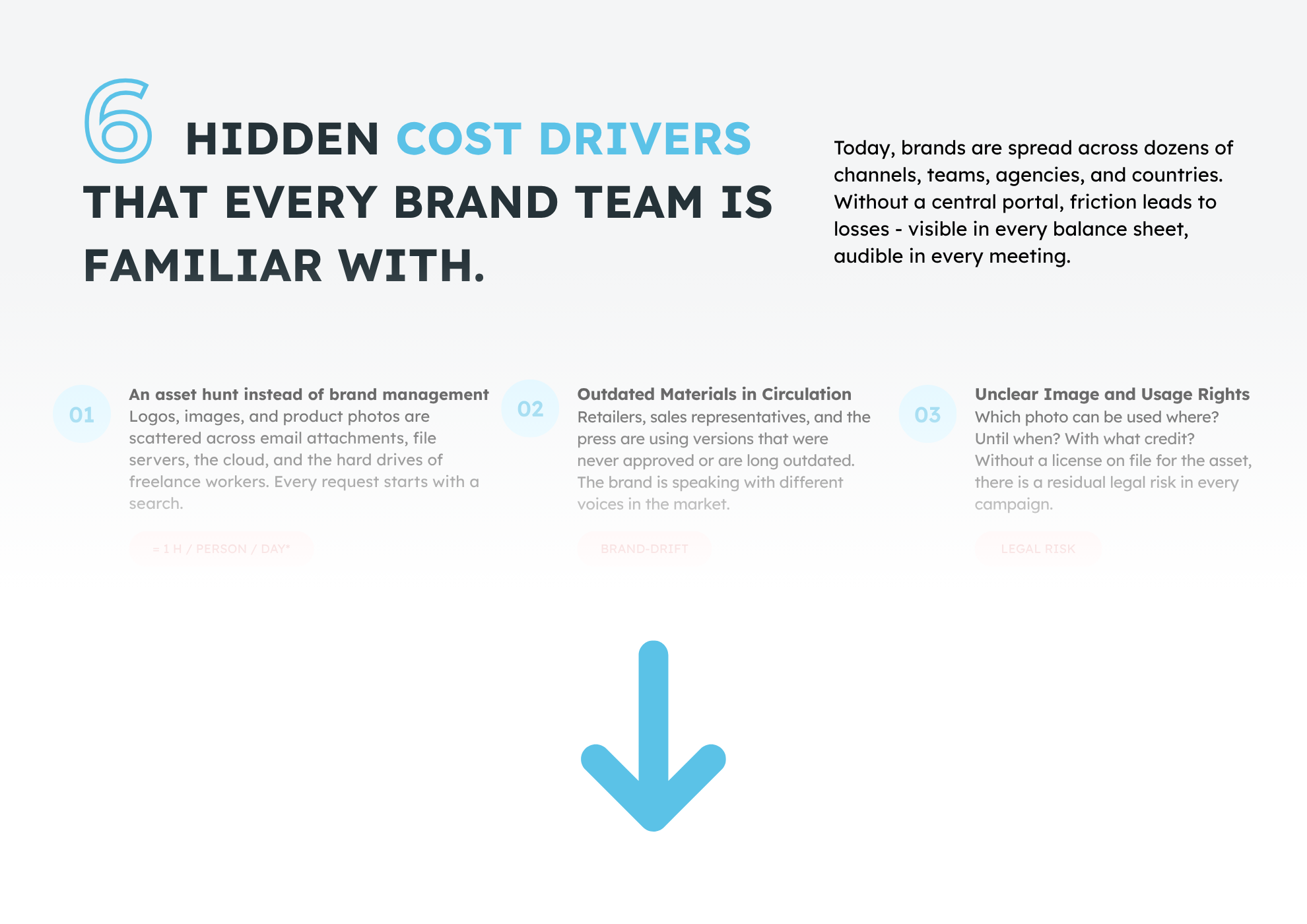
Where brand teams waste time and money every day - all on one page. Sign up and we’ll email you the full infographic for free.
What components do brand portal software solutions include?
Software solutions for brand portals help you manage your brand resources efficiently and communicate consistently. They generally come from two areas: specialized content management systems (CMS) or digital asset management systems (DAM). These are the key components:
- Digital asset management (DAM): For companies with many products especially, the DAM is the core. It stores, organizes, and manages all digital assets — logos, images, videos, documents — centrally and offers tagging, categorization, and advanced search. TESSA DAM is one such core.
- Brand guidelines and style guides: They define your brand's visual and verbal standards — logos, colors, fonts, image styles, tone — and ensure consistent presentation.
- Templates and layouts: Stored files for presentations, social media posts, flyers, or posters, aligned with the brand guidelines. Your team creates consistent marketing materials quickly.
- Collaboration: Features for teamwork and managing approval processes ensure smooth collaboration.
- Rights management and access control: With extensive rights and roles, you define who can access which content and perform which actions. Sensitive brand resources stay protected.
- Integration with other systems: Brand portals connect with CMS, CRM, social media, and email marketing tools, making data exchange and synchronization easier.
Combined, these components offer a comprehensive solution to manage your brand resources, improve collaboration, and protect your brand's integrity.
Which brand portal is right for me?
Choosing the right BrandHub, brand portal, or brand hub depends on your specific requirements. These criteria help you decide:
- Company size and structure: Large companies with several departments and international teams usually need a more comprehensive solution. If you're both manufacturer and retailer, the requirements are often so complex that you'll need an enterprise DAM solution anyway — the brand portal is then the front end to it.
- Number of products: The more different products you sell, the more important an enterprise-grade DAM system becomes.
- Feature scope: Make a list of the features you need — such as DAM, template management, workflow management, analytics and reporting, user and rights management, and integrations.
- Usability: An intuitive interface ensures your team uses the platform effectively.
- Integration options: The brand portal should fit seamlessly into your IT landscape — for example, CMS, CRM, PIM, and social media tools.
- Support and training: Look for reliable customer support, training, and user manuals.
- Cost: Pricing varies by feature scope and company size. Check the value for money and whether flexible models are available.
Stand-alone brand portal or part of a DAM?
That depends on your situation. If your company manufactures and sells many products, a powerful DAM is needed to manage the processes — like our TESSA DAM. It lets you use your assets across a wide range of tools and output channels — whether website, marketplaces, product data sheets, catalogs, or CRM. That's why we developed the TESSA BrandHub — a brand portal that's also suited for self-service.
If you have few products and a lot of material, a brand portal with a CMS in the background works well. Even then, you can use the TESSA BrandHub stand-alone — TESSA DAM isn't required as the basis. You can import assets and product data directly or use a product information management system (PIM) as the basis.
Do product images belong in a brand portal?
Yes — product images absolutely belong in your BrandHub. Products communicate your brand. That's why photos, images, and drawings belong in the brand portal, even for brands with few products. In that case, there are usually many photos per product. The more products a brand has, the fewer photos there tend to be per individual product — but the total number of assets rises sharply. Brands with many products therefore usually need a full-fledged digital asset management system as the basis and a BrandHub as the self-service application for distributing assets. The same applies to companies with many brands.
Examples of brand portals
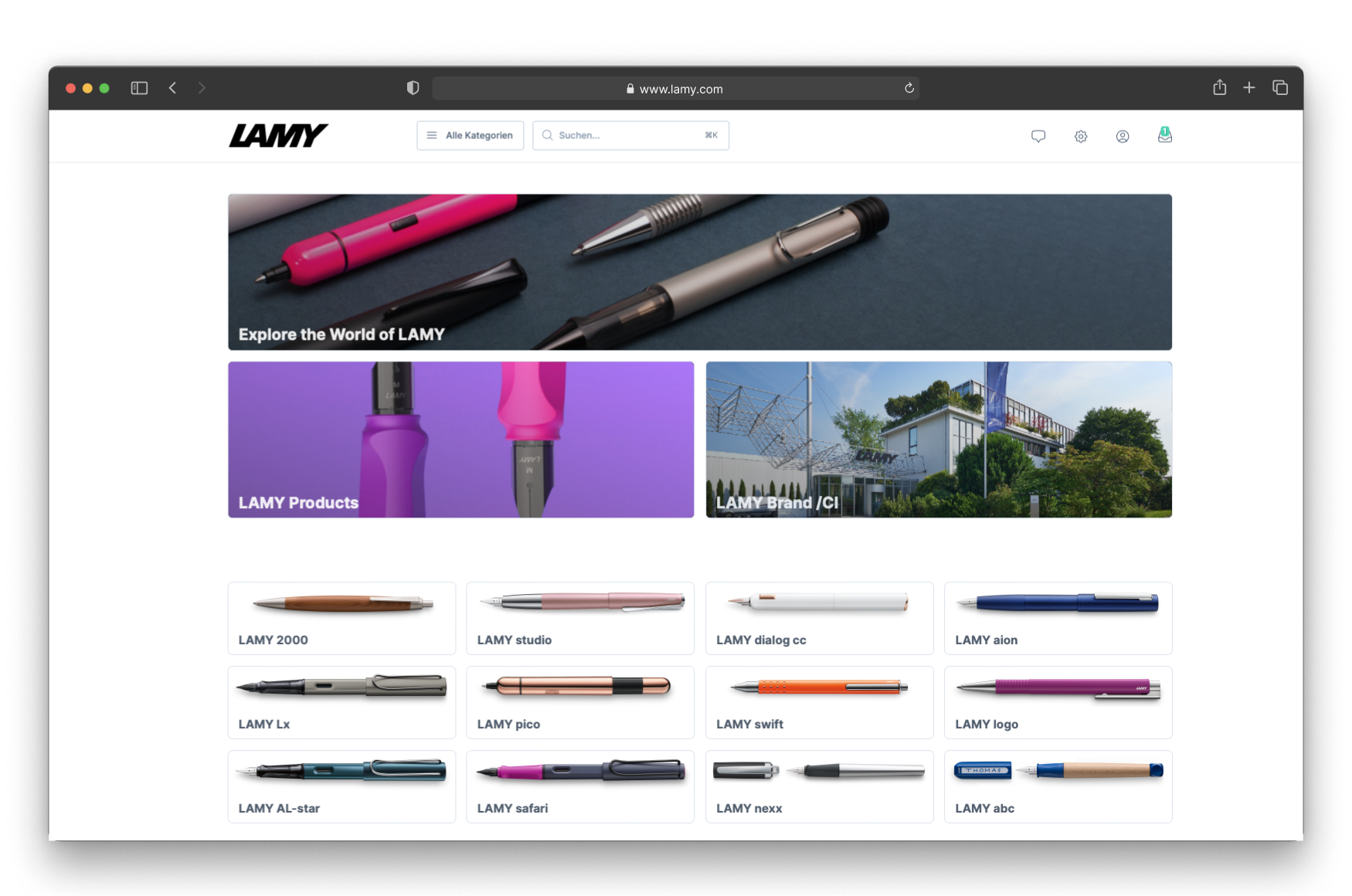
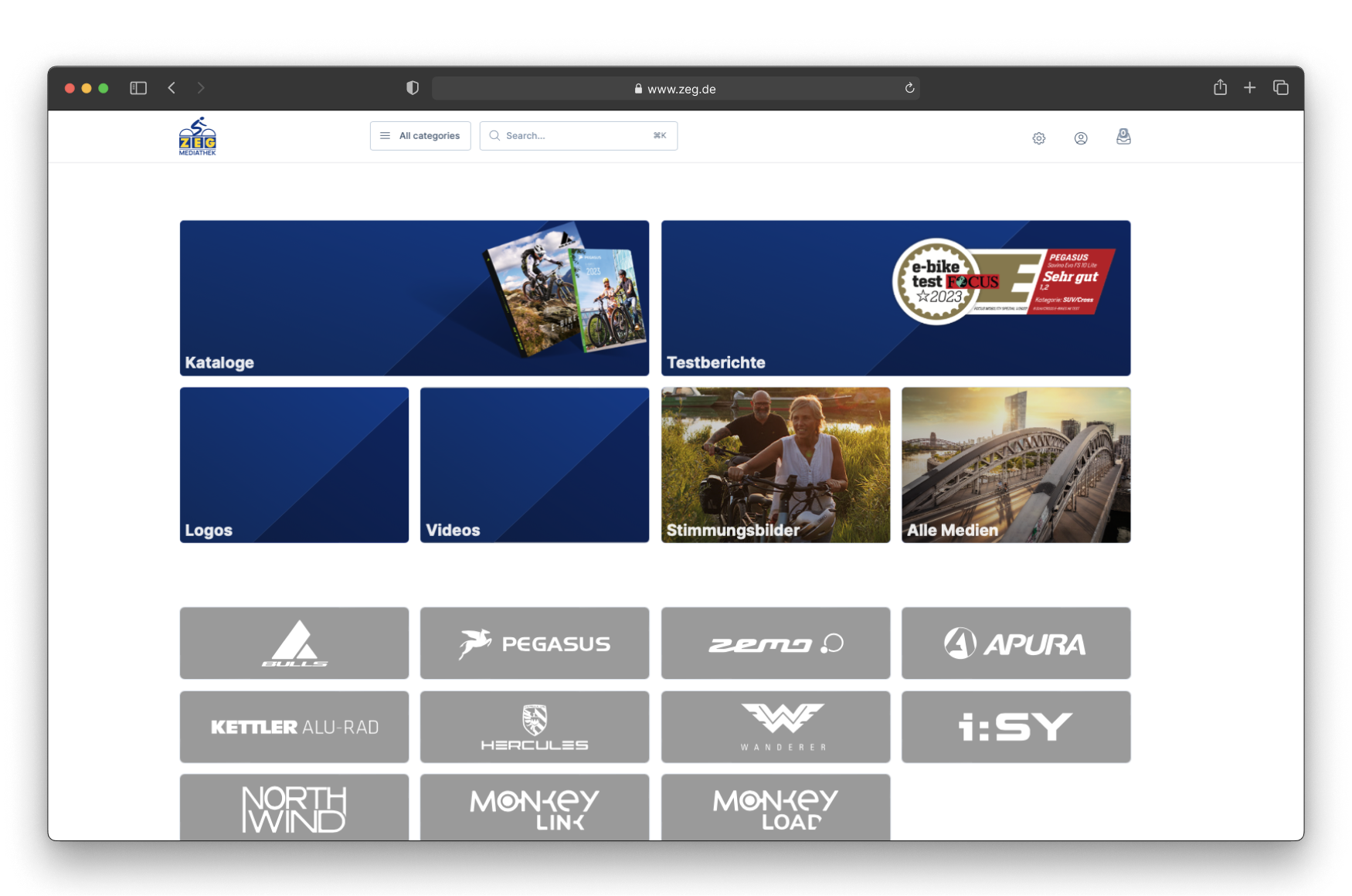
We all know brands like Nike, Coca-Cola, Adobe, Bosch, and Apple. Each of them has an impressive brand portal where they present their brand identity and interact with customers. There are also other examples like LAMY or ZEG, which present their brand excellently with the TESSA BrandHub.
Which target groups use brand portals?
Brand portals serve different target groups with a common goal: managing and maintaining a consistent brand identity. These groups benefit most:
- Marketing teams: They manage all marketing materials centrally, keep campaigns consistent, and quickly access templates and assets.
- Design and creative teams: They find logos, color palettes, fonts, and design elements in one place and always work on-brand.
- Sales teams: They access current sales documents and presentations and pass on on-brand materials to customers and sales partners.
- External agencies and partners: They get access to the latest brand guidelines and resources — easing collaboration and ensuring on-brand communication.
- Press: Journalists are special external partners with somewhat more specific material needs. Here, too, a DAM works well as the source.
- Leadership and brand managers: They monitor compliance with guidelines, steer brand strategy, and use analytics for well-founded decisions.
- HR departments: They ensure job postings, training, and onboarding documents are on-brand and strengthen the employer brand.
- Product management teams: They make sure packaging, user manuals, and product-related materials comply with brand guidelines.
- Customer service teams: They access on-brand response templates and FAQ documents and give consistent answers to customer inquiries.
By providing central access to all brand-relevant resources, a brand portal supports many target groups inside and outside the company — fostering consistent, professional brand communication.
Conclusion
Consistency and uniformity with the BrandHub
A BrandHub is worth it whenever you maintain your brand with visual material and serve several target groups. It creates consistency and uniformity in your internal and external communication — and you work far more efficiently than with general CMS solutions. Centralization enables more creativity and better collaboration.
If you also have many products, it helps when the brand portal is fed with data by a full-fledged enterprise-class DAM — like TESSA DAM. That lets you map many processes even more efficiently. The TESSA BrandHub is then the front end, which can also be used stand-alone in simpler cases. How closely product data and brand perception are connected is also shown in our article on reducing the return rate.


